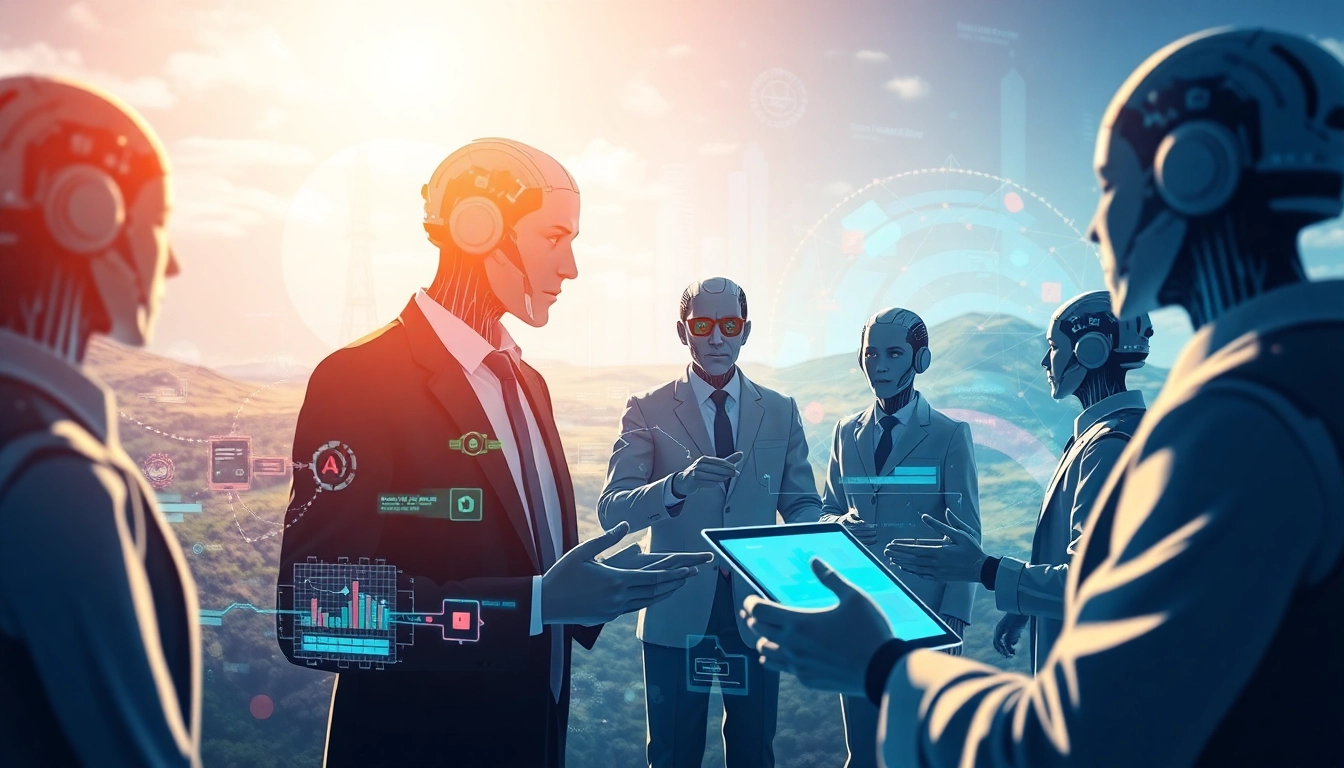
What Are Ai agents?
Definition of Ai agents
In the realm of artificial intelligence, Ai agents are defined as intelligent entities that can autonomously perform tasks to achieve specific goals. They continuously perceive their environment and utilize advanced algorithms to learn from interactions and experiences. The essence of Ai agents lies in their ability to operate independently while adapting and improving upon their performance through various machine learning techniques.
Types of Ai agents
There are several types of Ai agents that can be classified based on their functionality, complexity, and applications. Below are the most prevalent types:
- Reactive Agents: These Ai agents respond to immediate stimuli without memory or learning capabilities. They are used in situations where a quick response is essential, such as automated customer service chatbots.
- Limited Memory Agents: These agents can retain some information learned from past interactions, allowing for a more personalized experience. Self-driving cars often utilize limited memory to enhance decision-making based on previous driving data.
- Theory of Mind Agents: This advanced type aims to understand human emotions, intentions, and beliefs. Although still largely theoretical, these agents could lead to highly interactive and intuitively responsive systems.
- Self-aware Agents: The most sophisticated category, self-aware agents possess consciousness and self-understanding, enabling them to make independent decisions based on complex reasoning and ethical considerations. Current technology has not fully realized this type.
How Ai agents Operate
Ai agents operate using a combination of data acquisition, processing, and decision-making. Their operation can generally be broken down into the following stages:
- Perception: The agent perceives and collects data from its environment through sensors or user inputs. This could include text, voice, visuals, or any other form of information.
- Processing: The collected data is processed via algorithms that analyze the information and determine potential actions. This stage often involves decision trees, neural networks, and machine learning methodologies.
- Action: Based on the processed data, the agent takes action to fulfill its objectives. This may involve executing tasks, generating responses, or alerting users.
- Learning: Over time, Ai agents learn from their experiences, adapting their strategies to enhance performance and accuracy. This process often involves reinforcement learning and feedback loops.
The Importance of Ai agents
Benefits of Utilizing Ai agents
The adoption of Ai agents offers numerous benefits across various sectors:
- Increased Efficiency: Automating routine tasks allows organizations to save time and allocate resources to more complex undertakings.
- Cost Reduction: With reduced labor costs and operational inefficiencies, organizations see a significant decrease in overall expenses.
- Enhanced Accuracy: Ai agents can minimize human error, leading to more reliable outputs in various applications.
- 24/7 Availability: Unlike human workers, Ai agents can operate around the clock, ensuring constant service and responsiveness.
- Data Utilization: They can continuously analyze large volumes of data to provide insights, identify trends, and guide decision-making.
Challenges Faced with Ai agents
While the advantages are compelling, integrating Ai agents also presents challenges:
- Data Privacy: The extensive data collection necessary for Ai agents raises concerns over user privacy and data security.
- Bias in Algorithms: If not properly trained and monitored, Ai agents can perpetuate biases from their training data, affecting outcomes.
- Complexity of Implementation: Deploying Ai agents often requires substantial technical expertise and resources, which can be a barrier for organizations.
- Job Displacement: Automation may lead to reduced demand for certain jobs, sparking concerns about job security for workers in affected roles.
Performance Metrics for Ai agents
Measuring the effectiveness of Ai agents involves several performance metrics:
- Accuracy: The precision of the agent's outputs compared to established benchmarks.
- Response Time: The duration it takes for the agent to process inputs and provide outputs.
- User Satisfaction: Surveys and feedback mechanisms can gauge user experience and perception of effectiveness.
- Task Completion Rate: Evaluating the percentage of successfully completed tasks versus attempts.
- Learning Rate: Monitoring how quickly and effectively the agent adapts to new information.
Practical Applications of Ai agents
Ai agents in Business Processes
Ai agents have found applications across various business processes:
- Customer Support: Chatbots handle inquiries, troubleshoot issues, and provide instant responses, significantly enhancing customer satisfaction.
- Sales Automation: Ai agents can qualify leads, forecast sales trends, and provide tailored suggestions to sales teams.
- Supply Chain Management: They optimize routing and inventory management, leading to enhanced efficiency and reduced costs.
Innovation with Ai agents in Research
In research settings, Ai agents push boundaries by:
- Data Analysis: Analyzing complex datasets more efficiently than human researchers, leading to revolutionary findings.
- Simulation of Scenarios: Modeling outcomes under different variables permits researchers to explore hypotheses effectively.
- Collaboration: Facilitating collaboration across global research communities by optimizing communication and project management.
Quality Enhancement through Ai agents
Quality enhancement is another crucial area where Ai agents excel:
- Product Testing: Automating quality assurance processes ensures consistent evaluation and reliability of product functionalities.
- Process Improvement: Ai agents can analyze workflows to identify inefficiencies and recommend optimization strategies.
- Customer Feedback Analysis: Processing customer reviews and feedback helps businesses refine products and services.
Implementing Ai agents
Steps to Integrate Ai agents
Integrating Ai agents into existing systems requires a structured approach:
- Identify Areas of Needs: Determine which business areas can benefit from Ai agents.
- Select Appropriate Tools: Choose tools and platforms that align with business goals and technical infrastructure.
- Develop Custom Models: Tailor Ai models based on unique requirements and sector-specific demands.
- Train Ai Systems: Provide ample training data to enhance learning and performance of Ai agents.
- Monitor and Optimize: Continuously evaluate agent performance and make necessary adjustments to improve efficiency.
Best Practices for Ai agents
When implementing Ai agents, consider these best practices:
- Clear Expectations: Define clear objectives and expectations for Ai agents to align outputs with business goals.
- Regular Updates: Keep algorithms and data sets updated to improve learning and adaptability.
- Cross-functional Collaboration: Ensure collaboration between IT, operational teams, and end-users for effective implementation.
- Focus on User Experience: Design intuitive interfaces that provide seamless interaction with users.
- Compliance and Ethics: Adhere to regulatory standards and ethical considerations regarding data use and privacy.
Tools and Platforms for Ai agents
A variety of tools and platforms can facilitate the development of Ai agents:
- API Services: Utilize application programming interfaces (APIs) that provide robust frameworks for developing Ai functionalities.
- Machine Learning Platforms: Leverage platforms that offer machine learning capabilities, allowing for easy integration of Ai agents.
- Cloud Solutions: Cloud-based infrastructure provides scalable resources for managing and deploying Ai agents.
Future Trends in Ai agents
Predicted Developments
The landscape of Ai agents is continually evolving, with several predicted trends:
- Increased Collaboration: We may see greater collaboration between human workers and Ai agents, creating hybrid teams for enhanced productivity.
- Advancements in Natural Language Processing: Greater language fluency in Ai interactions will enable more nuanced and humanlike conversations.
- Integration with IoT: Combining Ai agents with Internet of Things (IoT) technologies will enable smarter autonomous systems and environments.
Ethical Considerations of Ai agents
As Ai agents continue to integrate deeply into society, ethical considerations come to the forefront:
- Transparency: Organizations must ensure transparency in how Ai agents operate and the data they use.
- Accountability: Clear frameworks should define accountability for decisions made by Ai agents, mitigating risks associated with errors.
- Inclusivity: Strive for diversity in training data to minimize biases and promote fairness.
Long-term Impacts of Ai agents
Looking ahead, Ai agents are likely to have significant long-term impacts:
- Workforce Transformation: The role of human workers is expected to shift towards oversight and collaboration with Ai, emphasizing creativity and critical thinking.
- Economic Efficiency: Increased automation may catalyze economic growth by bolstering efficiency and productivity across multiple sectors.
- Societal Changes: Greater reliance on Ai agents challenges conventional notions of privacy, security, and even human interaction.
FAQs
1. What tasks can Ai agents perform?
Ai agents can autonomously manage workflows, process data, make decisions, and interact with users, improving efficiency.
2. How do Ai agents learn?
Ai agents utilize machine learning algorithms to adapt and improve their performance over time based on past experiences.
3. What industries benefit from Ai agents?
Ai agents add value to various sectors, including finance, healthcare, marketing, and customer service, enhancing operational effectiveness.
4. Are there risks associated with Ai agents?
Yes, risks include potential biases in decision-making, security vulnerabilities, and implications for job displacement.
5. How can organizations implement Ai agents?
Organizations should assess their operational needs, select suitable tools, and ensure proper training for effective Ai agents integration.