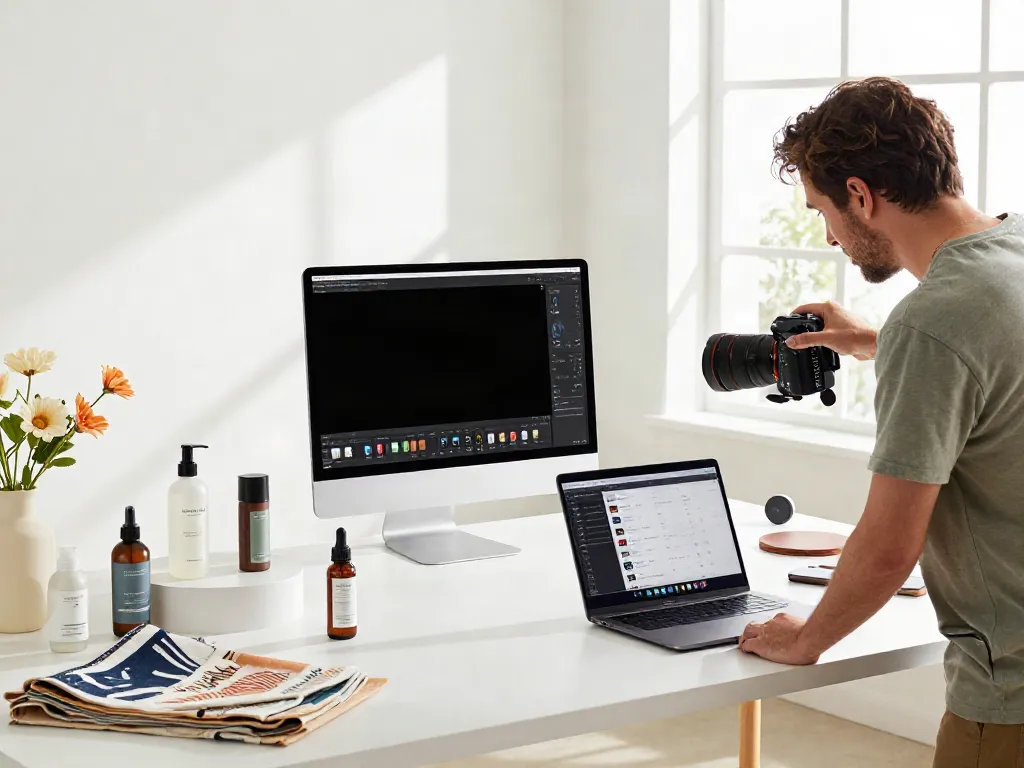
Understanding the Amazon Product Photo Generator
In the rapidly evolving world of e-commerce, product images serve as the frontline of customer engagement. Among the various tools available today, an Amazon product photo generator has emerged as a game-changer for sellers looking to create high-quality images effortlessly. These generators leverage artificial intelligence to output professional-grade photos from simple phone images, streamlining the process for sellers who may not have access to extensive photography resources. With the right photos, products not only stand out but also convert more effectively, leading to increased sales.
What is an Amazon Product Photo Generator?
An Amazon product photo generator is a digital tool that allows sellers to transform ordinary photographs into high-quality, listing-ready images ideal for e-commerce platforms like Amazon. By simply uploading a photo taken with their smartphone, users can produce professional-grade images that reflect their products accurately while adhering to Amazon's stringent image guidelines. These tools utilize advanced algorithms and machine learning to enhance the quality of the images, ensuring that details such as packaging, color, and product features are represented as accurately as possible.
Benefits of Using AI for Product Photography
- Time Efficiency: Traditional product photography can be time-consuming, requiring photographers, lighting setups, and props. AI-driven solutions can create stunning images in mere minutes.
- Cost Savings: Hiring professional photographers or using studio space can be expensive. An AI photo generator significantly reduces these costs, making high-quality photography accessible to all.
- Consistency: AI tools maintain consistency in image quality and styling across product lines, ensuring that all images adhere to a coherent brand aesthetic.
- User-Friendly: Many AI-powered generators are designed for ease of use, allowing individuals without a photography background to create high-quality images.
Key Features to Consider When Choosing a Tool
When selecting an Amazon product photo generator, consider the following features:
- Image Quality: Look for tools that deliver high-resolution images suitable for Amazon listings.
- Customization Options: The ability to fine-tune aspects such as background, size, and image composition can be crucial.
- Speed of Generation: Efficiency is key in the fast-paced world of e-commerce; choose a tool that produces images quickly.
- Customer Support: A robust support system can help you troubleshoot issues and maximize the tool’s potential.
How to Capture Effective Phone Photos for Conversion
While AI tools can enhance your images, the quality of your initial photos is paramount. Here are essential guidelines for capturing effective phone photos that will lead to superior outputs.
Essential Guidelines for Product Photography
- Lighting: Use natural light whenever possible. Avoid harsh artificial lighting and shadows that could distort the product's appearance.
- Background: Utilize neutral or minimal backgrounds to allow the product to stand out. Plain white or light-colored surfaces typically work best.
- Focus: Ensure the product is in sharp focus with no distractions in the frame. The label should be clearly visible to ensure readability.
Best Practices for Taking Photos with Your Smartphone
Here are some best practices to keep in mind when taking product photos with a smartphone:
- Hold the Camera Steady: Use both hands to stabilize your phone or rest it on a flat surface for sharper images.
- Experiment with Angles: Take photos from various angles to find the most flattering perspective of your product.
- Use Gridlines: Enabling gridlines on your camera can help follow the rule of thirds for a more balanced composition.
Common Mistakes to Avoid for Quality Outputs
To maximize image quality and reduce editing time, avoid these commonly made mistakes:
- Poor Lighting: Relying solely on flash can create unflattering, harsh images. Always favor natural lighting.
- Cluttered Backgrounds: Distracting elements can take the focus off your product. Keep the setting simple and clean.
- Not Checking the Focus: Ensure that the product is fully in focus before taking the shot. Blurry images can detract from the appeal.
Using the Amazon Product Photo Generator: Step-by-Step
Once you have your initial photos ready, using an Amazon product photo generator is typically a straightforward process. Here’s a step-by-step guide to get you started.
Uploading Your Product Images
Begin by uploading your selected phone photo to the generator. Most tools will allow you to drag and drop your images directly into the interface, or select them from your files.
Editing and Customizing Your Outputs
After uploading your image, you can usually customize aspects like background settings, cropping, and orientation. While some generators will automatically provide default settings, others may allow for specific adjustments to meet your needs.
Saving and Downloading Your Images
Once you are satisfied with the generated output, follow the prompts to save and download your images. Ensure you save them in the appropriate size and format for your e-commerce platform to prevent any compatibility issues.
Optimizing Your Product Images for E-commerce Success
Having great images is one thing, but optimizing them for e-commerce success is another. Here are essential steps to take.
Recognizing the Best Formats and Sizes for Amazon Listings
For Amazon listings, images should typically be at least 1000 pixels in height or width to enable a zoom function. Standard formats like JPEG and PNG are widely accepted. Additionally, maintaining a pure white background and avoiding watermarks will help your products meet Amazon’s image requirements.
Strategies for Using Lifestyle Images Effectively
Lifestyle images can enhance product listings significantly by showcasing your items in real-world contexts. Use these images to tell a story, illustrating how the product fits within a lifestyle or addresses a consumer's need.
Performance Measurement: Analytics and Success Indicators
Utilizing analytics tools to track the performance of your product images is crucial. Look for metrics such as click-through rates (CTR), conversion rates, and dwell time on your listings to understand how well your images are resonating with potential customers.
Future Trends in AI Product Photography (2026 and Beyond)
As technology evolves, so too will the tools available for product photography. Here are some trends to watch for in the coming years.
Emerging Technologies in Image Generation
Emerging AI technologies are expected to offer even more advanced capabilities, including automated scene setup and enhanced customization options that will make it easier for sellers to showcase their products.
Predictions for E-commerce Visual Content Strategy
Future strategies will likely focus on integrating augmented reality (AR) features that allow consumers to visualize products in their own environments, further bridging the gap between online and offline shopping experiences.
How to Stay Ahead with Innovations in Photography Tools
To remain competitive, sellers should continuously adapt to new tools and technologies, incorporating them into their visual content strategies. This ongoing innovation will help maintain engagement and drive sales in an increasingly crowded marketplace.